Three Portraits
Welcome to the first weekly edition of Scattering. I'm really looking forward to sharing my stories with you in this new space. As well as my daily microfiction from this week, you'll find a little something about what I've been reading, and a short story about trying to draw.
This week's daily stories
Monday
I spent all morning at the beach looking for two perfect shells that my mum could make into earrings. I got one straight away, so I thought I'd find another quickly too, but then they were all broken or the wrong colour or had holes in. She said we could just make a necklace, but she never wears necklaces. Then I found another and it was blue and shiny and perfect all over, but when I brought it back we saw the first one had got broken to bits in my dad's pocket, and it was nearly time to go home and I hadn't even had a chance to dig my hole. But maybe it's good that it happened, because when I was sad they got me an ice cream, and it meant I got to keep the second shell.
Tuesday
Grey-tongued, he braved sunlight and strangers until he reached the bookshop. Shelves and shelves of nothing. He had a pile of library books, five times renewed, and reservations just come in, but he wanted to buy. He wanted perfect corners and the smell of ink. He wanted papercuts, not words. After too much browsing he made his selections: a book on the history of the London Underground, which he had never ridden; and a hardback novel so thin it looked like a greetings card, with a big number on the back to compensate. They would tickle at the edge of his overdraft nicely. He took them to the counter to be judged.
Wednesday
When the leaves fell, things would feel better. The world would have shaken off its heaviness and he would see the sky through his window again. He knew what he needed. He had everything ready. He was just waiting for one good windy day to strip the branches bare. But the weather was calm and the air was still, all through September, all through October. Every tree he looked at had a leaf or two, just clinging on. He sat like a ship becalmed, until the new leaves came.
Thursday
In the dream there was wet cloth over her face, and when she peeled it away she found another layer, and another. When she woke, she could still feel it there, suffocating her, blinding her. She lived that way for years, afraid to dream, but hopeful, too, that the next layer of dream-cloth might be the last. Bolts and bolts of it, and gallons of water, until one night she dreamed a different dream, and breathed again.
Friday
He left late, because the cake had taken so long. But the cake was a disaster, too, an eggy, unrisen mess in the tin. It didn't even taste good with his eyes closed. So he was late and cakeless, except for the smear of it unnoticed on his trousers. By the time he arrived he was sweaty and stressed and falling over his tongue trying to apologise, and nobody understood why, because nobody had needed a cake from him, or punctuality. He went into the toilets to mop his brow with paper towels, and saw the stain on his leg, and left early.
Saturday
It's not your fault, he said to the tears on her face. You know the blobfish? They call it the world's ugliest animal. But it only looks like that when you fish it up. It's the pressure change that does it. You see what I mean? He smiled, eyes artfully crinkling, and put his hands on hers. She wondered how he would look if she dragged him back to the deep sea with her.
Sunday
It had been a sixty-year campaign, and just him for most of that. Him and his chart of constellations – new ones, ones that made sense. He knew when he began that he might get nowhere, and he thought he had accepted it, but now he felt his heart wearing out it all seemed harder. It was the world he felt for, stuck with its old way of looking at the sky. It would be all the same to him when he was gone. He would see the stars close up, and they would look completely different.
I have been reading...
- Second-Class Citizen by Buchi Emecheta. A semi-autobiographical 1974 novel about a woman who moves from Nigeria to the UK at the beginning of adulthood. A fine novel which blends naïve and evocative modes to great effect, and another win for the librarians at Hulme High Street library.
- The Bee is a magazine and website publishing and promoting working-class writers. I've been leafing through the website archive and looking forward to the first issue of the magazine. I particularly enjoyed Lynsey Hanley's piece on buses.
- Tony Harrison died last week, so I have been revisiting his poetry. I first encountered Harrison's work while at university (not as part of the course – browsing a bookshop). While I didn't feel much more out of place at university than anywhere else, poems like Them and [Uz] were good to have by my side in a place where my Leeds vowels were sometimes met with total incomprehension. 'v.' is, sadly, more relevant by the day, forty years on.
This week's story: Three Portraits
When she came in with her new hair, the girls all wanted to draw her. Or rather, Jenny wanted to draw her; Maisie wanted to do what her big sister was doing, as always; and Imogen looked up from her bin lorry when the paper came out, and decided it was all her idea.
Imogen drew with crayons, great wild curls flying all around the page so her mother looked like a burst pocket watch. Purple, for some reason. The stylist hadn't coloured it, but Immy said it looked purpler than it had before, so she did it all the way purple to show that. She was soon done with the portrait, and started adding butterflies. She said those were really there, too.
Maisie drew with pencils. She had found an old tin of sketching pencils a week before and, because the picture on the tin was of a cat, become obsessed. Her father had tried to explain what the different pencils were for, but he didn't really understand it, and she didn't listen. So instead she sucked at her lip and looked thoughtfully at the numbers and letters. Her mother longed to know what she was thinking when she chose, but she could never explain it. Maisie had drawn the shadows of the curls so dark that it swallowed up her mother's face. She looked like a tornado, but even so, you could tell who it was supposed to be.
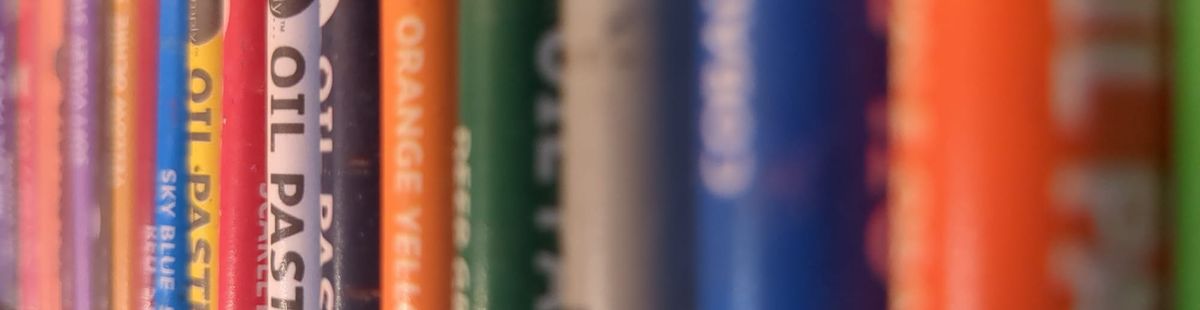
Jenny drew with oil pastels. She was sure she had got the hang of them. She used all the techniques her art teacher had showed her: she built her mother up in layers, blended colours for the shades in her new curls, scratched at her eyes to make highlights. She did something she called scumbling, which made them all laugh. Maisie said she had made it up to sound clever. Immy said that nobody would make up scumbling to sound clever because it sounded stupid. Their mother thought she ought to say that wasn't nice, but she was too busy trying not to laugh, because she could see Jenny didn't like them laughing.
Jenny's picture hadn't worked, and everything she did made it worse. It was smeary, indefinite: all the things her mother hoped the curls would stop her feeling. Jenny stippled delight onto her face; close up you could see the marks. What's good is that when it goes wrong you can always make something right on top, she said. She blended it more with a piece of kitchen paper. She bit a pastel to a flat point before her mother could stop her, spitting the unwanted chunk into the blending paper. She used the point of the pastel and the point of her fingernail to add more definition, and when she had finished, she said See, that's so much better. But it wasn't, and there were tears in her eyes.
Imogen had wandered back to her bin lorry and was making noises that made it all harder. Maisie was getting bored of drawing but didn't want to make a fuss. She had started a comic book in 5B pencil, the words unreadable. Their mother tucked a loose curl out of her eye and looked at Jenny's picture. It's the paper, she said. This is just cheap printer paper. You need proper thick paper, with a bit of texture.
And Jenny screamed, It's not the paper, it's NOT the PAPER, a big voice that made her seem small. She rubbed her eyes, and the mess her hands left on her face made her look like the picture of her mother. And her mother sat still as a model, still as a painting, while the other girls pretended not to notice and the bin lorry went bshhh bshhh bshhh.
Then Jenny said, in a small voice that made her seem big, There's another thing my art teacher told me, but you won't like it. She led them all out into the garden and took the lid off the barbecue. She lit a match and held it to the corner of the picture. The oily paper burned with a wet roar. Don't breathe the smoke, said Jenny. You don't want this stuff inside you. Her mother sent the other girls back into the house.